The psychology minor provides students with a broad understanding of human behavior, mental processes, and the scientific methods used to study them. Students will have the opportunity to explore various subfields of psychology, such as behavioral, biological, social, developmental, and clinical psychology, gaining insight into how biological, environmental, and social factors influence thoughts, emotions, and actions.
Minoring in psychology is a valuable choice for students across various fields because it enhances critical thinking, interpersonal skills, and a deeper understanding of human behavior. Whether a student is majoring in business, education, healthcare, or even technology, psychological principles can improve their ability to work with others, solve problems, and adapt to diverse environments. A psychology minor provides insights into motivation, learning, decision-making, and mental health, all of which are relevant in professional and personal life. Additionally, it strengthens research and analytical skills, making graduates more competitive in the job market. By minoring in psychology, students gain a versatile foundation that complements their primary field of study and prepares them for a wide range of career paths.
Psychology Faculty
Stacy McDonald, Ph.D., Professor of Psychology
Jill M. Swirsky, Ph.D., Assistant Professor of Psychology
Katharine Croce, Ed.D, BCBA-D., Associate Professor of Psychology
What Can I Do with this Minor?
The minor in Psychology can help students succeed in careers in the following areas (and more!):
- Clinical Work
- Education & Child Development
- Healthcare & Human Services
- Business & Marketing
- Criminal Justice & Law
- Technology & UX (User Experience)
- Communication & Media
Course Requirements (18 credits)
To complete a minor in Psychology, students must complete 18 credits of psychology coursework. Students are encouraged to work with their academic advisor to choose courses which align with their interests. A psychology minor provides insights into motivation, learning, decision-making, and mental health, all of which are relevant in a variety of disciplines and occupations. Students must earn at least a C in all courses to count towards the minor. To complete the Psychology minor, students must take:
- PSYC 110: Introduction to Psychology
- Five (5) Psychology electives from the 200, 300, or 400 level
Enhance Your Undergraduate Experience
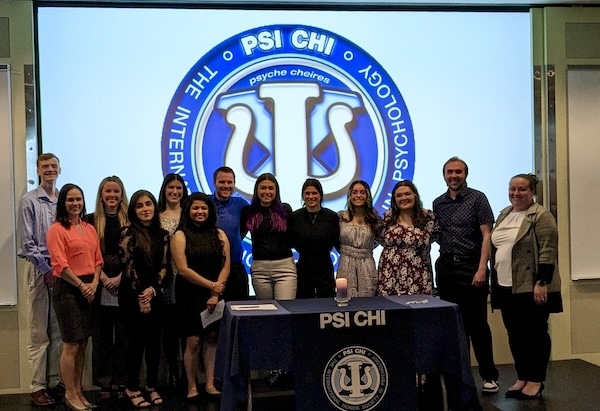
Want to get more involved outside the classroom? Psychology students are active in a variety of clubs and organizations, including: